
A structure intended for several brand events needs a brief that extends beyond opening night. The team must decide what stays recognizable, what changes between venues and who takes care of the pieces once the first event ends. Those choices belong in the initial design conversation.
Reusable event structures are best approached as a defined campaign requirement. For a New York or New Jersey activation followed by other appearances, describe the known sequence of events and acknowledge the unknowns. A useful plan connects the creative concept with configuration, handling and ownership, without promising that one build will suit every future venue.
1. Separate the campaign identity from what will change
List the elements that need to remain consistent: perhaps a recognizable outline, a repeated product arrangement or a particular relationship between the backdrop and brand sign. Then identify the elements that may change, such as campaign artwork, product selection or the size of the available space.
Compare the events you already know about. A display used in a hosted presentation may have a different role at an open-house event, even when both use the same campaign identity. Explain those differences before choosing a single configuration.
For each proposed variation, record what is required, what is preferred and what is only a possibility. This prevents an unconfirmed future idea from being treated as an agreed capability of the finished structure.
2. Define the configurations before defining the modules
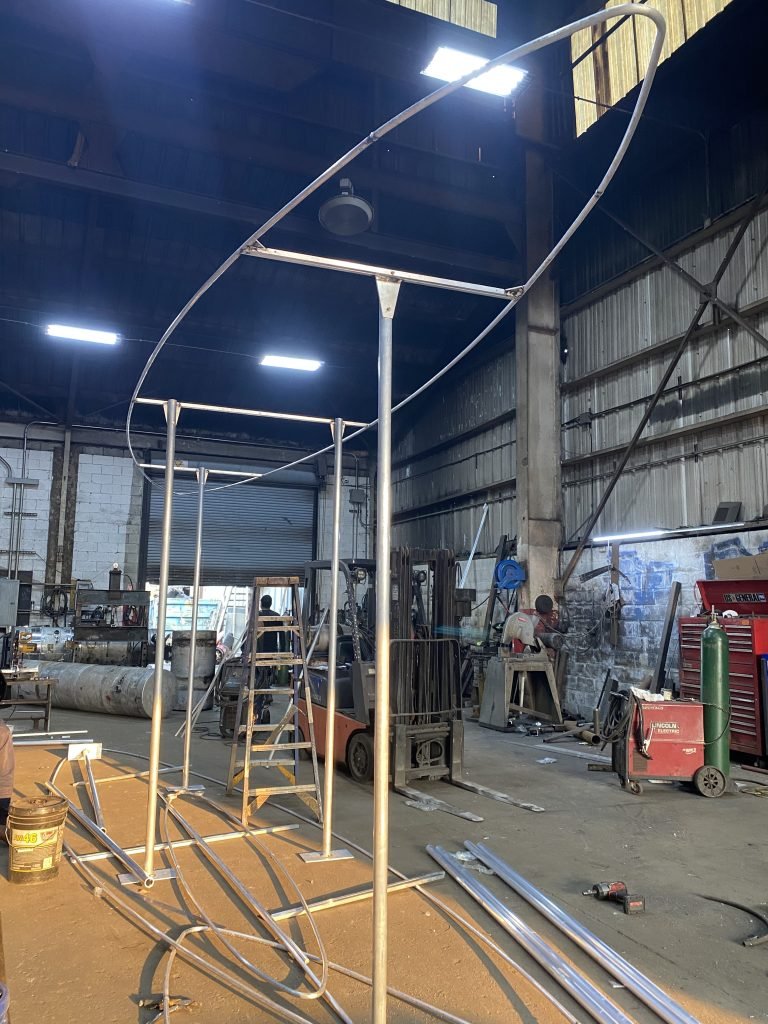
“Make it modular” is a useful starting request, but it leaves several decisions open. Describe the arrangements the campaign actually needs. Show what must work together, what may be omitted and which views need a finished appearance in each configuration.
Ask the fabrication team to review where the design could divide into separate pieces and how those pieces relate when assembled. Discuss how components will be identified and how the team will distinguish similar parts. The approved configuration should be clear to the people receiving and installing it.
Arca’s metal and aluminum fabrication includes modular aluminum structures and scenic builds. Custom wooden structures offer another design conversation for shaped panels and backdrops. Material selection and connections still need to be evaluated for the particular build and intended uses.
3. Give every component an owner between events
Once the first event closes, the structure becomes an inventory that someone must receive, account for and prepare for its next appearance. Decide who owns that process before the first installation.
A campaign handover record can include:
- A component list with identifying photographs and an agreed naming system.
- A record of the approved configurations and corresponding assembly information.
- The responsible contacts for packing, transport, storage and the next installation.
- A place to record missing pieces, visible damage and requested changes.
- The person authorized to approve repairs or replacements before another event.
Agree with the fabricator and handlers what instructions and packaging belong in scope. Do not assume that the receiving team attended the original installation or knows why two similar components are different.
The aim is a reliable handover. A folder of drawings is useful only if the next team can connect those drawings to the actual pieces it receives.
4. Compare the full campaign scope, not only the first build
Discuss the costs and responsibilities that continue after fabrication. Packing, handling, storage, transport, installation and condition reviews may involve different suppliers and agreements. Replacement graphics or changed components also need to be included in the campaign discussion.
Ask for a clear distinction between the initial build and later-event services. Record which quantities, locations and configurations form the basis of each quote. If later venues are unknown, identify the assumptions and the point at which the scope must be reviewed.
A reusable approach does not automatically establish a lower total cost or a particular environmental benefit. Evaluate it against the actual number of planned uses, the work needed between events and the arrangements for retaining the pieces. Keep unsupported savings or sustainability claims out of the campaign brief.
5. Review each new venue as a new use
Previous installation does not settle every question at the next location. Share the new layout, intended configuration and any changed use with the relevant production team. Identify changes to attached elements, surrounding scenery or the way guests will interact with the structure.
Before release for the next event, assign someone to reconcile the component inventory and arrange any required condition review with the appropriate supplier. Record issues and obtain agreement on the next steps. Reuse should not depend on an undocumented assumption that everything returned from the last event as expected.
Use Arca’s production services to discuss the fabrication and installation scope. Refer venue-access planning to the load-in checklist, while keeping the campaign record focused on what changes between appearances.
Frequently asked questions
Can one structure work at several venues?
That is a requirement to evaluate, not a universal promise. Share the known venues, intended configurations and use cases so the fabricator can discuss what the design must accommodate and where additional review will be necessary.
Should replacement graphics be part of the original brief?
Yes, if campaign artwork is expected to change. Identify who supplies the graphics, which areas change and who coordinates installation. Have the proposed relationship between the graphics and structure reviewed before fabrication.
Who should store and maintain the components?
Choose an accountable owner within the campaign team and agree the supporting suppliers. Confirm storage, handling and review responsibilities in writing; fabrication alone does not define the arrangements between events.
Plan the campaign before the first build
Discuss your multi-event project with Arca Studio Creations. Bring the known dates, venues, layouts and proposed changes. The fabrication brief guide can organize the initial request, with a separate record of the campaign’s future-use requirements.
Arca Studio Creations
Have a structure in mind?
We design, engineer and fabricate custom structures for luxury events across New York and New Jersey.
Contact us


