
A holiday display has to earn its space in a working store. It should help shoppers understand the gift assortment while leaving room to browse, compare products and speak with staff. A festive structure that hides the merchandise or interrupts the route to checkout can work against that purpose.
For holiday retail display fabrication in NYC and New Jersey, start with the selling task rather than a decorative theme alone. Define which products deserve attention, where the display will sit and how the store team will use it throughout the season. Those decisions give a fabricator a practical basis for discussing custom scenic elements.
1. Build the display around a specific gift assortment
Choose the products before deciding how many tiers, openings or scenic shapes the display needs. A single featured gift, several price points and a coordinated product bundle communicate different messages. Identify the main item and the supporting items so the hierarchy is visible in the layout.
Share actual dimensions, including packaging, handles and anything opened during a demonstration. Provide the quantity that should be visible at one time, the weight of each item and the combined arrangement. Do not use a product photograph as a substitute for these details.
Explain whether shoppers can pick items up or need assistance. A gift box that looks good inside a narrow opening may be awkward to remove. If products rotate during the season, list the largest planned format and distinguish confirmed items from possible additions. The fabricator can then review the intended use instead of designing around an incomplete assortment.
2. Check visibility and the full footprint in the store
Photograph the proposed location from the entrance, the main aisle and the closest product fixture. Mark the display on a measured plan, including its depth, base and projecting details. A front elevation alone cannot show how much useful floor space the structure occupies.
Review three views: what attracts attention from a distance, what identifies the products at approach and what a shopper sees while examining an item. Put the holiday message, brand and merchandise into that sequence. Several competing focal points can make an otherwise attractive display difficult to read.
Ask the store team to check the layout against doors, circulation, checkout queues and access to existing fixtures. Keep access requirements with the people responsible for the premises. If the display sits behind glass, share photographs showing reflections and the view into the store; do not assume an interior composition will read the same way from the sidewalk.
3. Separate scenic appearance from product support
A decorative panel, product platform and display surround have different jobs. Identify which parts carry merchandise and which establish the seasonal setting. Include the actual product arrangement when discussing support, attachment and contact with customers. A scenic piece should not be treated as a shelf because it looks substantial.
Bring the dimensions, weights and intended handling to the fabrication discussion. Have the support approach resolved for that specific design; a similar-looking installation does not establish a load rating for yours. Explain whether staff will lean into the display to reach products or regularly move merchandise across its surfaces.
Arca’s acrylic fabrication and custom wooden fabrication services offer relevant starting points for discussing visible panels, shapes and surrounding structures. Choose the specification with the fabricator after describing the display’s use, finish and dimensions. Include the backs and edges that remain visible from neighboring aisles.
4. Plan for replenishment and everyday store work
If Black Friday, Christmas gifting and year-end promotions feature different gift sets, list those changes before approving the display. Review the alternate product dimensions, quantities and message locations together. Agree which arrangements and graphic changes belong in the scope rather than assuming one Christmas composition accommodates every promotion.
The presentation also needs to remain understandable when a popular item sells out. Decide which products staff can substitute and how the arrangement should look at lower stock levels. An approved alternate arrangement is more useful than relying on staff to improvise around empty spaces.
Describe where replenishment comes from and how staff reach the merchandise. If a panel or separate scenic piece must move for access, resolve that requirement before approving its position. Confirm who handles products and who is responsible for moving the fabricated components.
Give labels and changing prices a defined place. Establish who provides the wording, artwork and finished graphic elements, and how updates will be handled. Ask for care and handling guidance appropriate to the agreed materials and finishes. The store manager should review these operating details alongside the visual concept.
5. Compare proposals using the same retail requirements
For Christmas retail displays in NJ or NYC, a useful request includes a marked plan, site photographs, product specifications, the desired assortment and the dates the location is available. Clarify whether the request covers a window composition, an interior display or separate elements in both locations.
List each fabricated piece and identify anything supplied by the retailer, designer or another vendor. Ask what is included in fabrication, transport and installation through Arca’s production services. Record any unresolved dimensions or graphic approvals before accepting the scope.
For broader budget considerations, use the NYC and NJ fabrication cost guide. A retail quote still needs the specific display information: the assortment, site conditions and agreed pieces matter more than a generic holiday reference.
Frequently asked questions
Can a small store use custom holiday scenic elements?
Yes, a compact location can be the starting point for a custom discussion. Share the measured space and the products first. Review the proposal against circulation, daily store work and the view of the merchandise before approving its size.
Should the display hold products or frame an existing fixture?
Decide that in the brief. Framing an existing fixture and supporting merchandise create different requirements. Identify every contact point and product weight, and have the fabricator resolve the support approach for the intended arrangement.
Can the assortment change during the holiday season?
Discuss planned changes before fabrication. Supply the dimensions and presentation needs of the alternate items, and agree which substitutions the layout accommodates. Do not assume that an opening or platform designed for one product fits another.
Discuss a holiday retail display with Arca
Send Arca Studio Creations your retail display brief with the installation date, NYC or New Jersey location, available dimensions, product details, visual references and budget. Include photographs of the working store so the conversation connects the festive concept with the space where it needs to sell.
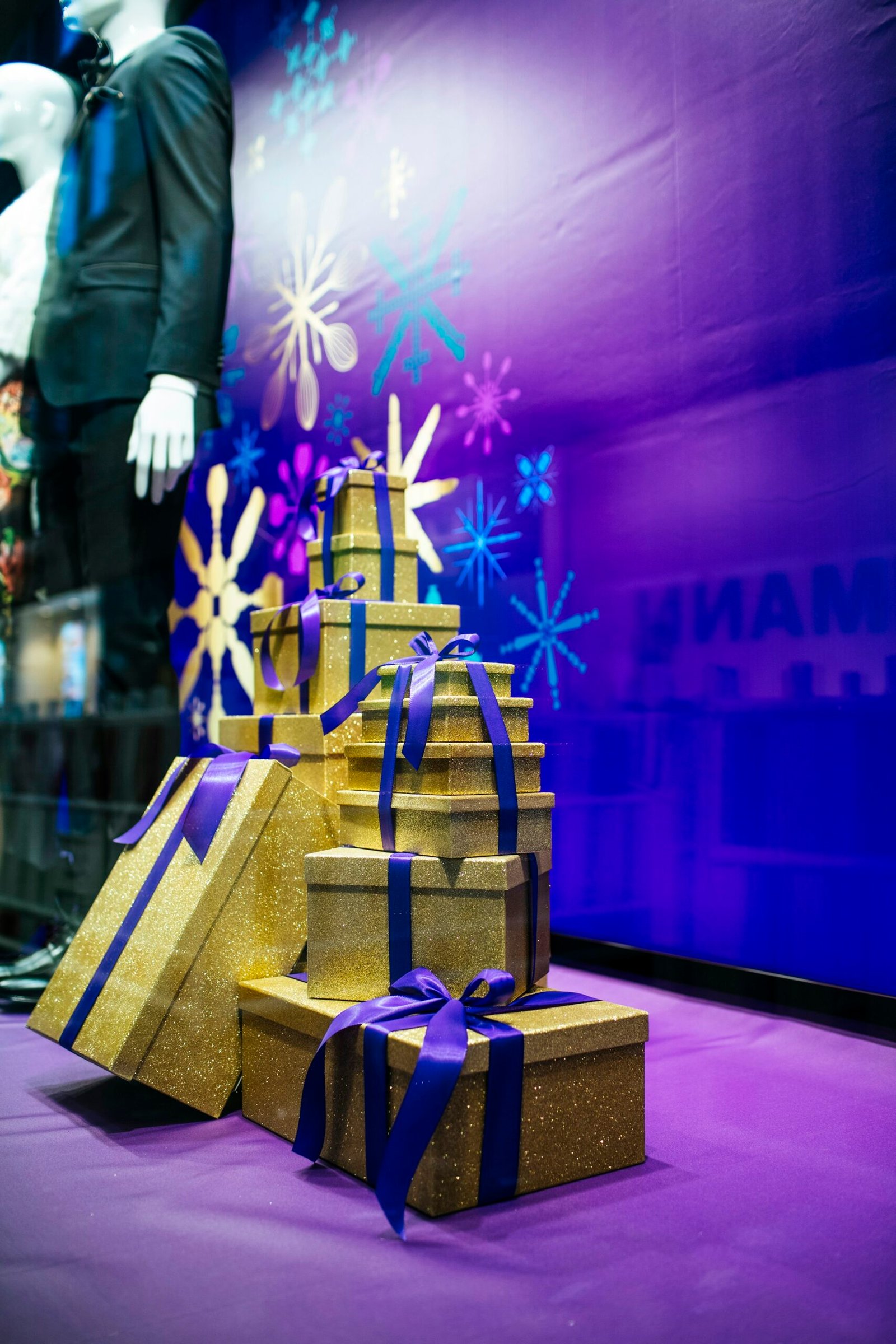
Cover Photo: Nguyen Phuc Hau / Unsplash. Illustrative reference for combining Christmas scenery, seasonal messaging and merchandise in a shop window; not an Arca project.
Arca Studio Creations
Have a structure in mind?
We design, engineer and fabricate custom structures for luxury events across New York and New Jersey.
Contact us


