
Custom event fabrication cost depends on what must be designed, built, finished, moved and installed. A backdrop described as “a branded wall” might mean one camera-facing surface or a freestanding composition seen from every side. Those are different scopes, even when the reference photographs look similar.
For a New York or New Jersey event, start by defining the complete piece and the services surrounding it. A useful budget conversation explains what the money covers, which decisions remain open and where alternatives are possible. That gives a planner a better basis for choosing than a price attached to an undefined concept.
Define the full production allowance
Separate the fabrication allowance from the total cost of having the installation ready at the venue. If your budget is intended to cover everything, say so. If another company handles delivery, graphics or installation, identify that arrangement before comparing proposals.
Use a simple cost map: design and development; fabrication and finishing; packing and transport; installation; and the agreed work after the event. Ask the proposal to identify included work, exclusions and any amounts that depend on information still to be confirmed. A missing line is a question to resolve, not evidence that the task is free.
Venue conditions also belong in the discussion. Share the room, receiving arrangements and access windows so each supplier is pricing the same circumstances. “Delivered to the building” and “assembled in the event room” describe different handoffs. Confirm which handoff your production allowance needs to fund.
Read the quote by work, not just by material
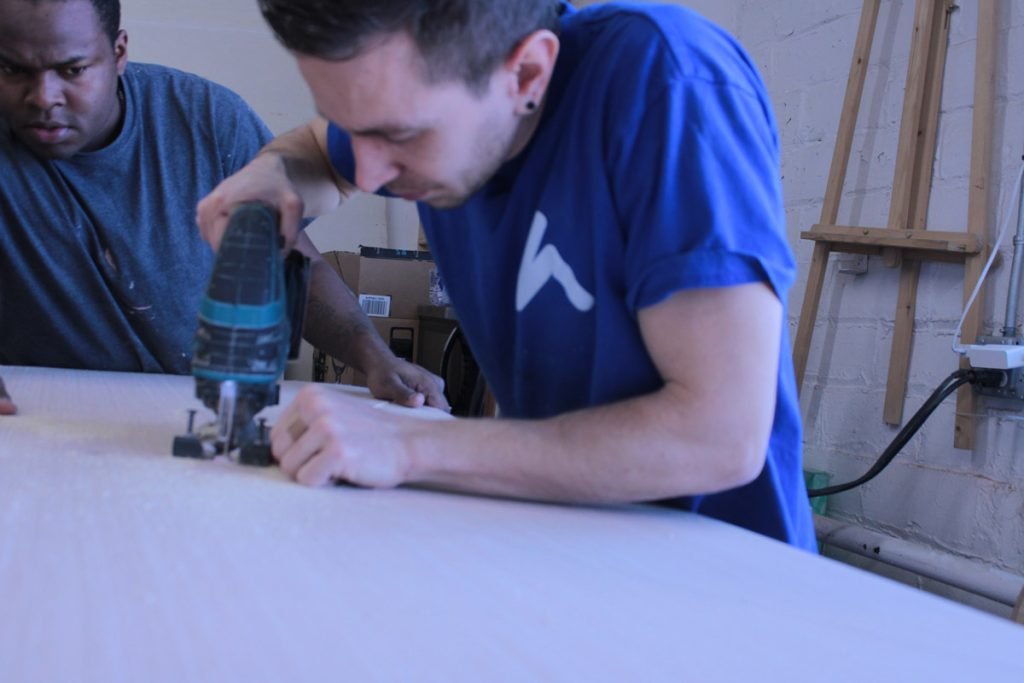
The material name is only part of an estimate. Two wooden backdrops can involve very different shapes, visible surfaces and assembly requirements. Two acrylic installations can differ in size, connections and the appearance expected at close range.
- Shape and quantity: clarify the number of pieces, their dimensions and any repeated or unique forms.
- Surface expectations: identify the faces guests and cameras will see, together with the agreed appearance.
- Connections: identify graphics, floral elements or other components and who supplies each one.
- Handling: specify the proposed delivery and assembly scope rather than assuming it is included.
- After the event: establish who removes the piece and whether it goes to storage, another venue or an agreed destination.
When discussing custom wooden structures, explain the silhouette and finish you value. For acrylic walls and installations, show how the piece should appear within its surroundings. Ask which parts of that direction have the greatest effect on the proposed scope.
Choose where the design needs detail
A practical way to explore a budget is to rank the features rather than asking for an unspecified cheaper version. Identify the details that carry the concept: perhaps a curved silhouette, a particular surface appearance or a clear view through the installation. Then identify what can change without losing that purpose.
Consider a hypothetical branded backdrop viewed mainly from the front. The team could ask whether simplifying an unseen return, changing a secondary detail or reducing the number of separate pieces would help the budget. The fabricator must evaluate those options; none should be assumed to save a fixed amount.
Request alternatives against the same requirements and ask what each changes. An option that removes a visible finish or transfers installation to your team is not equivalent to the original proposal. It may still be useful, but the tradeoff should be explicit enough for the person approving the budget to understand.
Compare proposals on the same scope
Put the proposed deliverables side by side before comparing totals. Check dimensions, quantities, finish expectations and responsibilities. Flag an item when one proposal includes it and another leaves it open. Ask each supplier to clarify the difference in writing.
Also distinguish an early estimate from a price based on confirmed requirements. Ask which measurements, selections or venue details underpin the figure and what would require it to be revisited. The goal is to understand the uncertainty rather than conceal it inside a single number.
Arca’s event fabrication brief guide covers the information to supply. Use one current version for every quote request. When you update that version, tell each supplier what changed so the comparison remains meaningful.
Keep changes and future use visible
Before approving a design, ask how later changes will be documented and priced. A revised dimension, a different visible finish or an added component may affect more than the appearance. Request a description of the effect on scope and scheduling before accepting the revision.
If you intend to reuse the piece, introduce that requirement early. Include the planned configurations, handling and storage responsibilities. Compare the initial build together with the expected work between uses. Reuse is a planning objective, not automatic proof that the more expensive proposal will become the cheaper one.
Keep an agreed proposal, current drawing version and change record together. This gives the event team a shared reference when someone asks whether an added item was already included.
Frequently asked questions
Can I get a useful estimate before the design is final?
Yes, an early discussion can identify assumptions and options. State what is confirmed and ask which missing decisions could change the estimate. Treat the figure according to that stated level of detail.
Is a smaller backdrop always less expensive?
Do not assume size settles the comparison. Shape, finish, quantity and delivery scope also need to be compared. Ask for the effect of the specific size change you are considering.
Should I share my working budget?
A budget range helps frame useful options when you explain what it must include. Also identify the features you want to protect and the decisions you are willing to reconsider.
Discuss a budget with a defined scope
Arca’s creative production and scenic fabrication services connect a concept with the practical build. Send your project details with the event date, venue, references and working allowance so the conversation can focus on the scope and options that matter to your event.
Arca Studio Creations
Have a structure in mind?
We design, engineer and fabricate custom structures for luxury events across New York and New Jersey.
Contact us


