
Choosing event backdrop materials starts with the result you need in the room. Wood, acrylic and aluminum can each contribute to a custom installation, but naming a material does not define the finished piece. Its shape, surface, connections and relationship to other elements still need to be resolved.
For a New York or New Jersey event, compare materials against one shared concept. Ask how each proposal would achieve the intended appearance and work within the venue. This keeps the decision focused on the backdrop you are commissioning instead of a general argument about which material is best.
Give every material option the same starting point
Describe the backdrop’s purpose before selecting a material. Will people stand directly in front of it, see it from across the room or walk around it? Does the design call for a solid visual background, visible texture or a view through part of the installation?
Identify the dimensions and which faces will be visible. Include the location of graphics, floral elements and nearby equipment, along with the suppliers involved. State whether the piece is intended for a single setting or several configurations.
A common reference makes the comparison useful. If the wood proposal is a curved, finished structure and the aluminum proposal is only a frame, they do not yet describe the same deliverable. Ask what is needed to bring each option to the intended finished appearance.
Explore wood when shape and surface are central
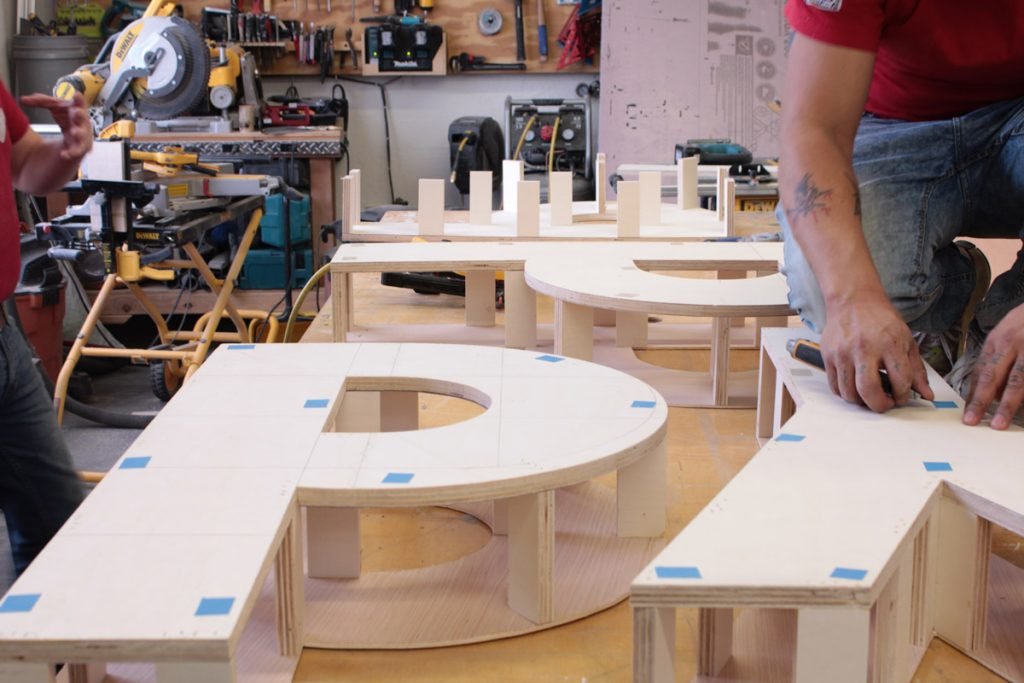
Arca’s wooden structures and sculpted backdrops include curved forms, shaped panels and natural textures. Start the conversation with the silhouette you want, then identify the surface qualities that support it. A reference might be useful for its curve without being the right guide to its final appearance.
Ask which parts of the piece are visible from the front, side and rear. Discuss how separate sections will relate visually and where the design can accommodate changes in direction or assembly. The appearance of a single panel does not show how the whole backdrop will read in the room.
If visible wood character is part of the concept, say which qualities matter rather than relying on a broad word such as “natural.” If the direction emphasizes a uniform surface instead, provide that reference. Request confirmation of the proposed finish and the way it will be approved; do not assume every wooden build will look rustic.
Explore acrylic when the surroundings remain part of the picture
Acrylic can be discussed when the design involves transparency or visual depth. Arca’s custom acrylic walls and installations provide a starting point for that direction. Explain what should remain visible through or around the piece, including any objects behind it.
Evaluate the proposed appearance in its setting. A transparent feature seen against an uncluttered reference background may read differently beside furniture, a busy wall or visible equipment. Ask the photographer and lighting supplier to review the concept with the fabricator when those relationships matter.
Identify the edges, connections and surfaces that will be close to guests or cameras. Ask how those details will be represented in drawings or samples and how the finished piece should be handled. Agree who will supply any graphics or connected elements. Choosing acrylic does not by itself settle printing, lighting or other suppliers’ work.
Explore aluminum as part of the structure and assembly plan
Arca’s metal and aluminum service includes modular aluminum structures, trusses and scenic builds. Discuss whether the metal is intended to remain visible or form part of a larger composition with other surfaces.
When considering modular construction, describe the intended configurations and how the installation will be handled between locations. Ask the fabricator to explain the proposed sections and assembly approach. The useful comparison is the specific system being proposed, rather than an assumption that every aluminum structure will assemble in the same way.
Provide information about anything that may connect to the structure. Identify the supplier responsible for dimensions, weights and attachment information, and agree who evaluates those interfaces. Material choice alone cannot establish a structure’s suitability for a load, an outdoor setting or a particular venue condition.
Compare complete proposals and visual approvals
Bring the options back to the same event requirements. A useful comparison records the proposed appearance, included components, visible connections, delivery scope and decisions awaiting confirmation. Ask how each option would accommodate the parts of the concept that matter most.
Where a sample is proposed, agree what it is intended to approve. A surface sample may help communicate appearance without representing the dimensions or construction of the finished piece. Likewise, a rendering communicates a visual direction but should not silently stand in for confirmed site measurements.
A combined-material design may be worth discussing when different parts serve different purposes. Identify the interfaces and responsibilities rather than adding materials solely for variety. Use the event fabrication brief guide to capture the agreed requirements once the comparison has clarified them.
Frequently asked questions
Which material is cheapest for an event backdrop?
Compare proposals for the same shape, appearance and delivery scope. A material label alone does not establish the total price. Ask what changes in each alternative and which tasks remain outside it.
Can the same design combine wood, acrylic and metal?
That is a design direction to discuss, not an automatic specification. Explain each material’s role and ask how the connections, assembly and supplier responsibilities would be resolved.
Can I choose the material from a photograph?
Use the photograph to describe what you like. Ask the fabricator to confirm the proposed material and construction approach; an image does not establish what the pictured structure is made from.
Discuss materials around your actual event
Send Arca your backdrop concept with the venue, event date and the visual qualities you want to preserve. Include any material preferences and unresolved questions so the conversation can compare appropriate options for the complete installation.
Arca Studio Creations
Have a structure in mind?
We design, engineer and fabricate custom structures for luxury events across New York and New Jersey.
Contact us


