
A successful event backdrop needs to work in the photographs people will actually take. The full installation may look balanced in a rendering, yet a close group photograph can crop out the logo or reveal a distracting edge. Planning the image early gives the designer, fabricator and photography team a shared target.
Start with the most important photograph rather than a wall size. Define who appears in it, what the brand needs to communicate and where the camera can stand. Then develop the physical backdrop around that composition and the space available at your New York or New Jersey venue.
Define the photograph before the backdrop
List the images the event needs: an individual portrait, a small group, a product interaction or a wider view of the setting. Choose a primary use, then check the others against it. A composition developed only for one person may not provide the same background for a group.
Discuss horizontal and vertical framing with the photographer or content team. Ask what needs to remain inside each crop, including the subject, brand mark and any important design detail. If guests will also use their phones, include that everyday viewpoint in the discussion.
Create a simple annotated sketch showing people, the background and the intended frame. It can communicate the photographic goal without pretending to be a construction drawing. Note which dimensions are provisional so they are confirmed later.
Set the scale within the real room
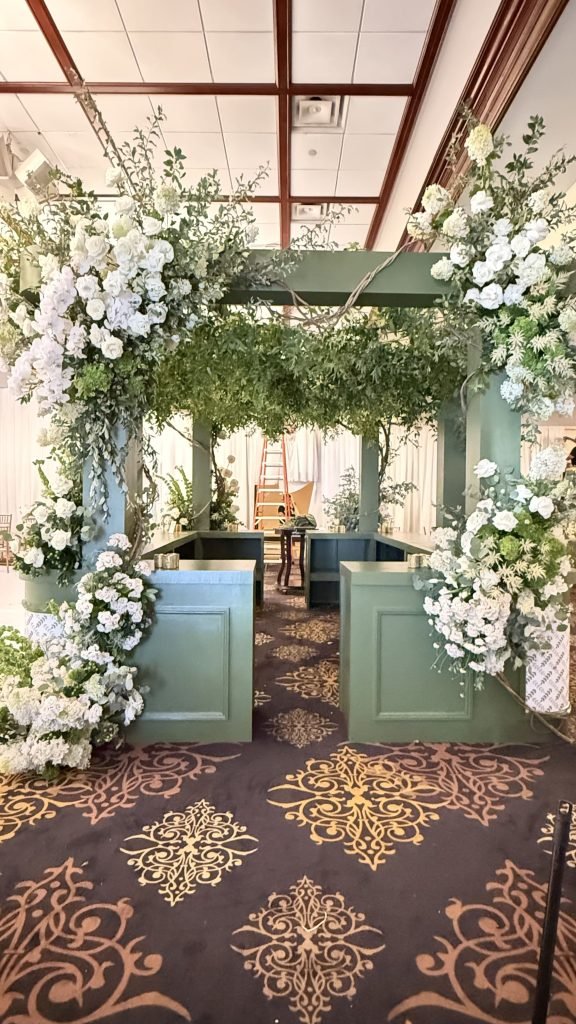
Review the proposed backdrop together with the space in front of it. The camera position, guest standing area and approach route all affect how the installation can be used. Ask the venue which parts of the surrounding floor must remain available for other activity.
Include the photographer when establishing the intended frame. A backdrop’s overall width is not the same as the background visible from a particular camera position. Discuss the primary group size, then test a wider or taller composition if those photographs are expected.
Consider what happens at the edges. A camera moved sideways may reveal the rear of the piece or the room beyond it. Decide which views should look finished and identify those faces in the fabrication scope. If the location changes, repeat the composition check rather than assuming the approved view still applies.
Place the logo where the photograph can retain it
Show the proposed brand mark on the sketch with people in position. Check whether heads, shoulders, products or props hide it in the main photograph. Ask the brand team which mark must remain legible and whether supporting messages can be omitted from tighter crops.
A large logo is not automatically a better solution. Compare a few placements against the intended compositions and request brand approval of the selected artwork and position. For a repeated pattern, check the photograph rather than judging only the empty wall.
Clarify who supplies and installs the branding. If a separate graphic or signage supplier is involved, agree the dimensions, alignment references and attachment information with the fabricator. This is a coordination question, not a reason to assume every part of the artwork is included in the backdrop order.
Review material and lighting together
Material references should be considered under the conditions planned for the photograph. Ask the photography and lighting teams what they need to assess, and agree whether a representative sample or a later setup check will answer the question.
For a design using acrylic walls or installations, discuss the objects and room features visible through or around the piece. Include reflections and the intended position of lights in that review. These details are best checked with the people responsible for the final photograph.
A sculpted wooden backdrop raises different visual questions: how its shape reads from the camera position, which surfaces remain visible and how the chosen finish supports the composition. Use Arca’s project gallery for visual references, then explain the particular feature you want to discuss. An image alone does not establish the dimensions, materials or construction of a proposed piece.
Rehearse the photograph and the guest approach
Agree who will approve the photographic setup and when that check fits into the event preparation. If a complete rehearsal is not available, identify what can be checked beforehand and what must be confirmed at the venue.
During the setup check, place people where guests are expected to stand. Review the primary crop, logo visibility, surrounding edges and any objects visible behind the scene. Capture a test photograph rather than relying only on how the installation looks while walking past it.
Then consider the next group. Identify where people approach, wait and leave, and how staff will guide them without blocking the intended camera position. Coordinate the installation itself through the separate event load-in checklist; this photographic review should build on that plan rather than replace it.
Frequently asked questions
What size should an event photo backdrop be?
Start with the group size, intended framing and available camera position. Ask the photographer and fabricator to review those conditions together before approving dimensions. One standard size will not answer every room and composition.
Should the logo go above the guests?
Test that position against the actual crop. A mark can sit above people yet disappear from a tighter image. Compare placements with people represented in the frame and obtain brand approval.
Does fabrication include photography or lighting?
Confirm those services and suppliers separately in the project scope. Share their requirements with the fabricator so the physical backdrop and photographic setup can be coordinated.
Plan the backdrop around the image you need
Discuss your event backdrop with Arca. Send the venue, event date, visual references and intended photographic use, including any photography, branding or lighting suppliers already involved. That context helps connect the design with the way guests will experience it.
Arca Studio Creations
Have a structure in mind?
We design, engineer and fabricate custom structures for luxury events across New York and New Jersey.
Contact us


